

2 min read
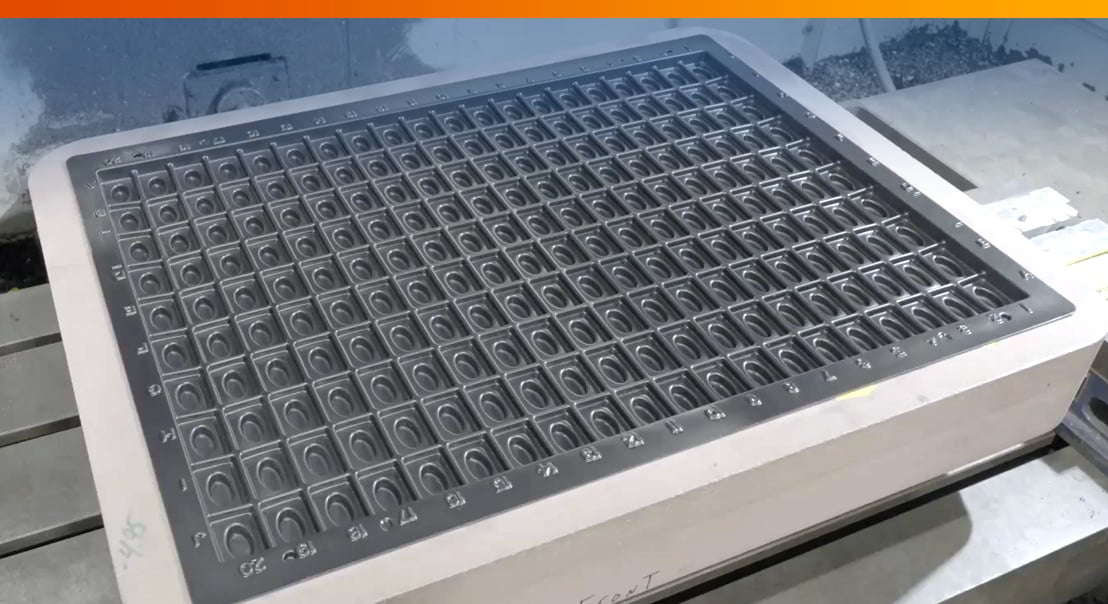
In this blog, we are discussing our robotic pharmacy—an automated system designed to sort, dispense, and manage medications with precision. From thermoformed structural walls to custom trays that accommodate a range of medication sizes, every component is engineered to integrate seamlessly with the robot at the heart of the unit.
The process includes forming, trimming, drilling, and assembling complex plastic and metal parts, each step ensuring the system operates reliably and accurately. It’s a detailed, highly coordinated workflow that brings advanced automation to the world of medical dispensing.
Check out this video or read the transcript below to learn more
In this area of the plant we are working on what is essentially a robotic pharmacy.
In this application, we make the walls that go around the unit, as well as the trays that dispense medication, all done through a robot down the center of the unit. What you are seeing here is some common tooling, out of the same mold we cut a window and added hardware. In this case, we are adding light bars and gaskets. Finally, we have a door where we are adding a lot of sheet metal and windows to it, as well as the slides that we will add to make the mechanism open.
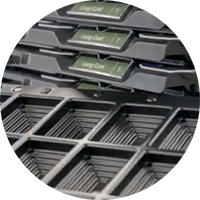 On to this side of the assembly area, we make a series of trays that allow for different sizes and shapes of medication. In this case, what happens is the robot will pull the tray open and pick the product out of it. The next thing we are going to do is go on the floor and see how the trays are made.
Thermoforming
The operator removes the materials to be formed from the stack. The sheets are shaken to ensure that they are not stuck together and are taken to the thermoformer.
Once loaded into a thermoformer tray, the sheets are fed into the machine. After being heated, the mailable sheets are applied to the tray mold for the robotic pharmacy. The layout of each tray will vary in depth and reservoir size depending on the customer's specifications. The plastic is then allowed to cool before being taken to the trimming stage.
The plastic tray is loaded into the trimming machine. In a matter of seconds, it cuts to the product specifications. The excess is removed, and the tray is then delivered to the next stage of processing.
In the next step, each reservoir is drilled out. This step is important as it helps seat the tray correctly when applied to the final assembly. Without it, the reservoir may bubble at the bottom or trap static electricity, making it more difficult for the robotic pharmacy to select medications.
Related Posts
Increase Precision for Demanding Product Applications with Thermoforming Technology
Plastic part manufacturing for demanding product applications depends on a lot of upfront effort....
GUIDE: Flexible Thermoforming Practices eBook
Thermoforming is a manufacturing process that uses heat and pressure to form a part from a sheet of...
Machining Aerospace Parts That Fit, Form & Function Perfectly Within Your Assembly
What we make at Kenson is not necessarily an individual part, but often many parts that go into an...